The Lennox smart thermostat lineup has evolved into one of the most capable climate control systems available for residential HVAC in 2026. Unlike basic programmable thermostats that simply run schedules, Lennox’s iComfort series integrates directly with compatible Lennox heating and cooling equipment to optimize performance, track energy usage, and provide granular control through a mobile app. For homeowners with Lennox systems, or those planning an upgrade, understanding what these thermostats offer, how they install, and whether they justify the investment matters before making the jump to smart climate control.
Table of Contents
ToggleKey Takeaways
- Lennox smart thermostats use proprietary communication technology that allows for real-time diagnostics, variable-speed blower optimization, and multi-stage heating/cooling coordination that universal thermostats cannot replicate on Lennox equipment.
- The iComfort series, including the S30 and E30 models, offers advanced features like geofencing, humidity control, allergen monitoring, and ‘Feels Like’ temperature calculations for precision comfort management.
- Lennox smart thermostats are designed exclusively for communicating Lennox HVAC systems manufactured after 2012; homeowners with non-Lennox or older equipment will need universal alternatives like Ecobee or Honeywell.
- Installation of a Lennox smart thermostat on existing Lennox systems is straightforward for DIY enthusiasts, though professional installation ($150–$300) is recommended for systems with zoning or accessories to unlock all advanced features.
- The iComfort app provides intuitive weekly scheduling, energy usage reports, geofencing automation, and voice control via Alexa and Google Assistant, though Apple HomeKit integration is not supported.
- A Lennox smart thermostat can save up to 30% on energy bills when paired with a variable-speed Lennox system, with payback periods of 1.5 to 2 years on average household utility bills.
What Is the Lennox Smart Thermostat?
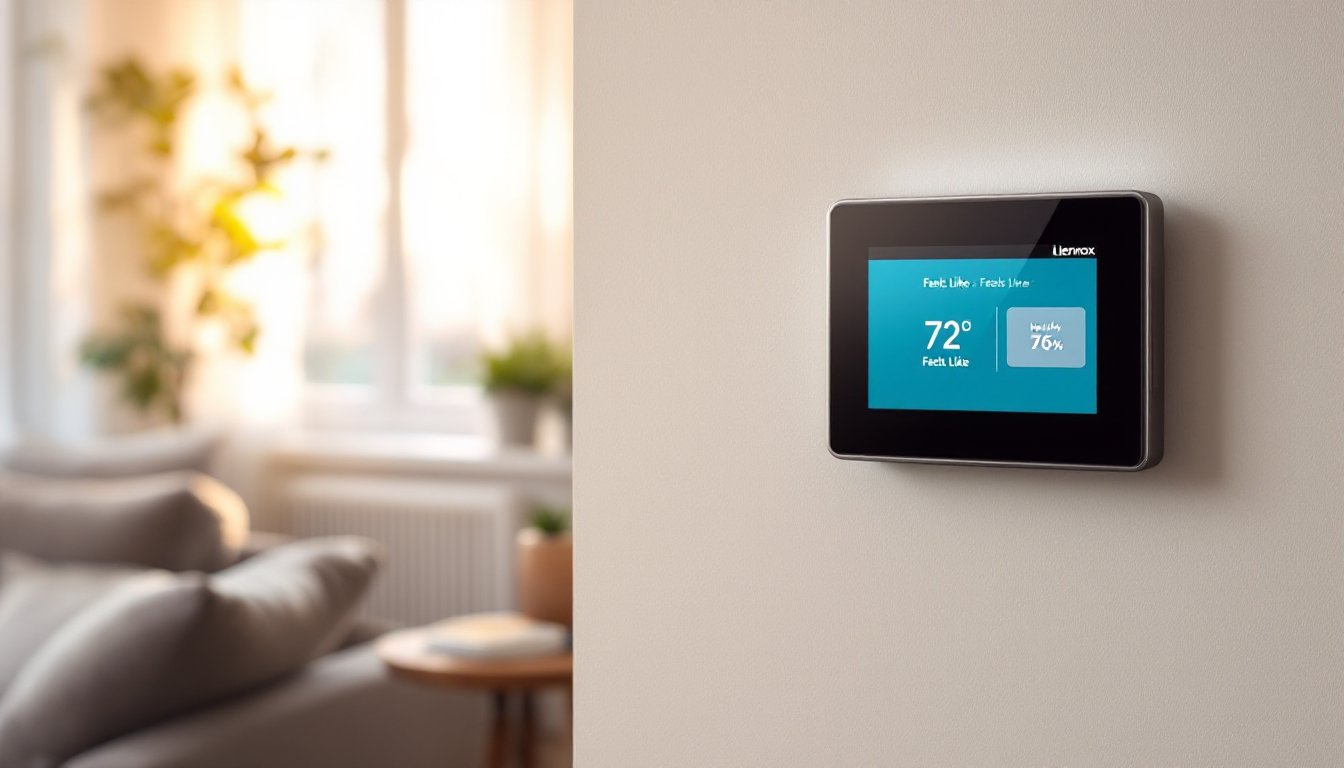
Lennox offers several smart thermostat models under the iComfort brand, designed specifically to communicate with Lennox HVAC equipment. The flagship models, iComfort S30 and iComfort E30, feature full-color touchscreens, built-in humidity sensors, and two-way communication with compatible furnaces, air conditioners, and heat pumps.
Unlike universal smart thermostats that work with any 24V HVAC system, Lennox thermostats are proprietary. They use a dedicated communication protocol to extract real-time diagnostics, adjust variable-speed blower motors, and coordinate multi-stage heating and cooling. This tight integration allows for efficiency optimizations that third-party thermostats can’t replicate on Lennox systems.
The iComfort S30, introduced in earlier generations and refined through 2026, remains the premium option with a 7-inch touchscreen, while the E30 offers similar functionality in a streamlined interface. Both models support geofencing, remote access via the iComfort app, and integration with Alexa and Google Assistant. Lennox also offers the iComfort M30, a more budget-conscious model with fewer smart features but still compatible with the brand’s communicating systems.
Key Features That Set Lennox Smart Thermostats Apart
Proprietary Communicating Technology
Lennox thermostats use a proprietary protocol to communicate with compatible equipment. This allows the thermostat to monitor system diagnostics, track filter life, alert users to maintenance needs, and adjust fan speeds dynamically based on humidity and temperature demand. Competing universal thermostats can turn equipment on and off, but they can’t fine-tune variable-speed components the way a Lennox thermostat can.
Smart Away Mode with Geofencing
The iComfort app uses smartphone GPS to detect when occupants leave home and automatically switches to an energy-saving setpoint. When someone returns, the system ramps back up. Users can adjust the geofence radius and override the feature if needed. This beats traditional programmable schedules for households with irregular routines.
Precision Comfort and Humidity Control
The S30 and E30 models include built-in humidity sensors and can control compatible whole-home dehumidifiers or humidifiers. The thermostat can prioritize humidity targets over temperature, which is critical in humid climates where moisture control affects comfort as much as air temperature.
Allergen Defender
This feature monitors local pollen and air quality data, then automatically runs the HVAC fan to circulate air through the system’s filter during high allergen periods. It requires a compatible air filtration system and works best with MERV 11+ filters or electronic air cleaners.
Feels Like Temperature
Rather than displaying only air temperature, Lennox thermostats calculate a “Feels Like” temperature that factors in humidity. This gives a more accurate picture of comfort and helps explain why 72°F can feel different depending on indoor moisture levels.
Compatibility and Installation Requirements
System Compatibility
Lennox smart thermostats are designed exclusively for Lennox communicating HVAC systems. This includes furnaces, air conditioners, heat pumps, and air handlers that use Lennox’s proprietary communication wiring. Homeowners with non-Lennox equipment or older Lennox systems without communicating capability will need to stick with universal smart thermostats like Ecobee or Honeywell.
To confirm compatibility, check the model number on the furnace or air handler. Systems manufactured after 2012 with model designations like SLP98V, EL296V, or XC25 are typically communicating-capable. When in doubt, consult the equipment’s installation manual or contact a Lennox dealer.
Wiring and Power
Lennox thermostats connect via a proprietary multi-conductor cable rather than standard thermostat wire. Most Lennox systems already have this wiring in place from the factory install. The thermostat draws power directly from the HVAC system, no C-wire concerns or battery backup needed.
DIY vs. Professional Installation
Installing a Lennox smart thermostat on an existing Lennox system is straightforward for anyone comfortable with basic wiring. The process involves:
- Shutting off power at the breaker to the HVAC system.
- Removing the old thermostat and labeling wires (or taking a photo).
- Mounting the new backplate and connecting the wires to corresponding terminals.
- Snapping the thermostat onto the backplate and restoring power.
- Following the on-screen setup wizard to configure system type, Wi-Fi, and preferences.
That said, if the system has never been set up with a communicating thermostat, or if zoning dampers or accessories are involved, professional installation is recommended. Improper setup can prevent the thermostat from unlocking advanced features or accessing diagnostics. Lennox dealers typically charge $150–$300 for installation depending on region and complexity.
The iComfort App: Remote Control and Scheduling Made Easy
The iComfort app (available for iOS and Android) is the primary interface for remote control and advanced scheduling. After connecting the thermostat to Wi-Fi and creating an account, users can adjust temperature, switch modes, view energy usage, and receive maintenance alerts from anywhere.
Scheduling and Automation
The app supports fully customizable weekly schedules with separate setpoints for heating and cooling. Users can create multiple daily periods (wake, away, home, sleep) and copy schedules across days. Unlike older programmable thermostats with clunky button interfaces, editing schedules in the app is intuitive.
Geofencing automates schedule overrides, but users can also set one-time holds or vacation modes directly from the app.
Energy Reports and Usage Tracking
The iComfort app logs runtime data and displays monthly energy reports broken down by heating, cooling, and fan usage. While it doesn’t measure actual kWh consumption or utility costs (the thermostat isn’t connected to the electrical panel), it provides useful insights into system performance and usage patterns.
Smart Home Integration
Lennox thermostats integrate with Amazon Alexa and Google Assistant for voice control. Users can ask Alexa to set the temperature, switch modes, or check the current indoor climate. Integration with Apple HomeKit is not supported as of 2026, which limits appeal for households invested in the Apple ecosystem.
Energy Savings and Cost Benefits
Lennox claims the iComfort S30 can save up to 30% on energy bills when paired with a compatible variable-speed Lennox system. That figure depends heavily on usage patterns, climate, and how well the system was controlled before the smart thermostat upgrade.
In practice, savings come from several sources:
- Geofencing and scheduling reduce runtime when no one is home.
- Variable-speed optimization allows the system to run longer at lower speeds, which is more efficient than short-cycling at full capacity.
- Humidity control reduces the need to overcool in summer to manage moisture.
- Maintenance alerts ensure filters and equipment stay in peak condition.
For a household spending $150/month on heating and cooling, a 20% reduction translates to roughly $360/year. The iComfort S30 retails around $450–$550, meaning payback occurs in 1.5 to 2 years if savings hold.
But, these thermostats deliver the most value on high-efficiency Lennox systems. Pairing an S30 with an older single-stage furnace won’t unlock the same efficiency gains, and in that case, a universal smart thermostat may offer better ROI.
Comparing Lennox Smart Thermostats to Competitors
Lennox iComfort S30 vs. Ecobee SmartThermostat
The Ecobee SmartThermostat is a universal model that works with most 24V HVAC systems and includes remote room sensors for multi-zone temperature averaging. It costs around $220–$250 and integrates with Apple HomeKit plus to Alexa and Google.
The Lennox S30 costs roughly double and is limited to Lennox equipment, but it offers deeper system integration. It can monitor equipment health, optimize variable-speed blowers, and control whole-home humidity and air quality devices in ways Ecobee can’t. For Lennox owners, the S30 is the better choice. For everyone else, Ecobee offers more flexibility.
Lennox iComfort S30 vs. Nest Learning Thermostat
The Nest Learning Thermostat (4th generation, 2026) retails for around $280 and works with nearly any HVAC system. It learns user behavior over time and auto-adjusts schedules. But, Nest lacks the diagnostic and optimization capabilities the S30 provides on Lennox systems.
Nest excels at ease of use and aesthetic design, but it’s a poor fit for Lennox communicating equipment. Homeowners with Lennox systems sacrifice efficiency and diagnostics by choosing Nest over iComfort.
Lennox iComfort E30 vs. Honeywell T9
The Honeywell T9 is a mid-range universal thermostat with remote sensors and geofencing, priced around $180–$200. It’s a solid budget option for non-Lennox systems but doesn’t offer the system-specific optimizations or diagnostics of the iComfort E30.
For Lennox owners choosing between the E30 and S30, the difference comes down to screen size and interface. Both models support the same smart features and integrations.
Conclusion
The Lennox iComfort smart thermostat lineup delivers intelligent climate control tailored specifically to Lennox HVAC systems. The proprietary communication protocol unlocks efficiency, diagnostics, and comfort features that universal thermostats can’t match on compatible equipment. Installation is straightforward for existing Lennox owners, and the iComfort app provides robust scheduling and remote access. While the upfront cost is higher than universal alternatives, the energy savings and system optimization justify the investment for households with communicating Lennox equipment. For anyone else, a universal smart thermostat offers better value and flexibility.