Running a pressure washing business means dealing with high-pressure equipment, other people’s property, and countless variables that can go sideways fast. One slip on a wet surface, one errant spray that damages siding, or one vehicle accident en route to a job, and the business owner could be facing a lawsuit that wipes out years of profit. Insurance isn’t optional for pressure washing operations: it’s the difference between a manageable setback and financial ruin. This guide breaks down the coverage types every pressure washing business needs, what they actually cost in 2026, and how to find a provider that understands the unique risks of the trade.
Table of Contents
ToggleKey Takeaways
- Insurance for pressure washing is essential, not optional—property damage claims and bodily injury lawsuits can wipe out years of profit if you lack adequate coverage.
- General liability insurance is the cornerstone policy, covering third-party bodily injury and property damage with typical limits of $1 million per occurrence and $2 million aggregate for most small operations.
- Commercial auto insurance is mandatory if you transport equipment or travel to job sites, as personal auto policies exclude business use and leave you technically uninsured.
- In 2026, general liability for a pressure washing business costs $400 to $1,800 annually depending on size and scope, while a business owner’s policy (BOP) bundling multiple coverages starts around $800 to $1,500 per year.
- Most commercial clients and municipal contracts require proof of insurance before signing a contract, making liability coverage essential to bid on higher-paying work.
- Specialized insurance providers experienced in contractor and service businesses offer better coverage options and faster certificate of insurance delivery than generic small-business carriers.
Why Pressure Washing Businesses Need Insurance
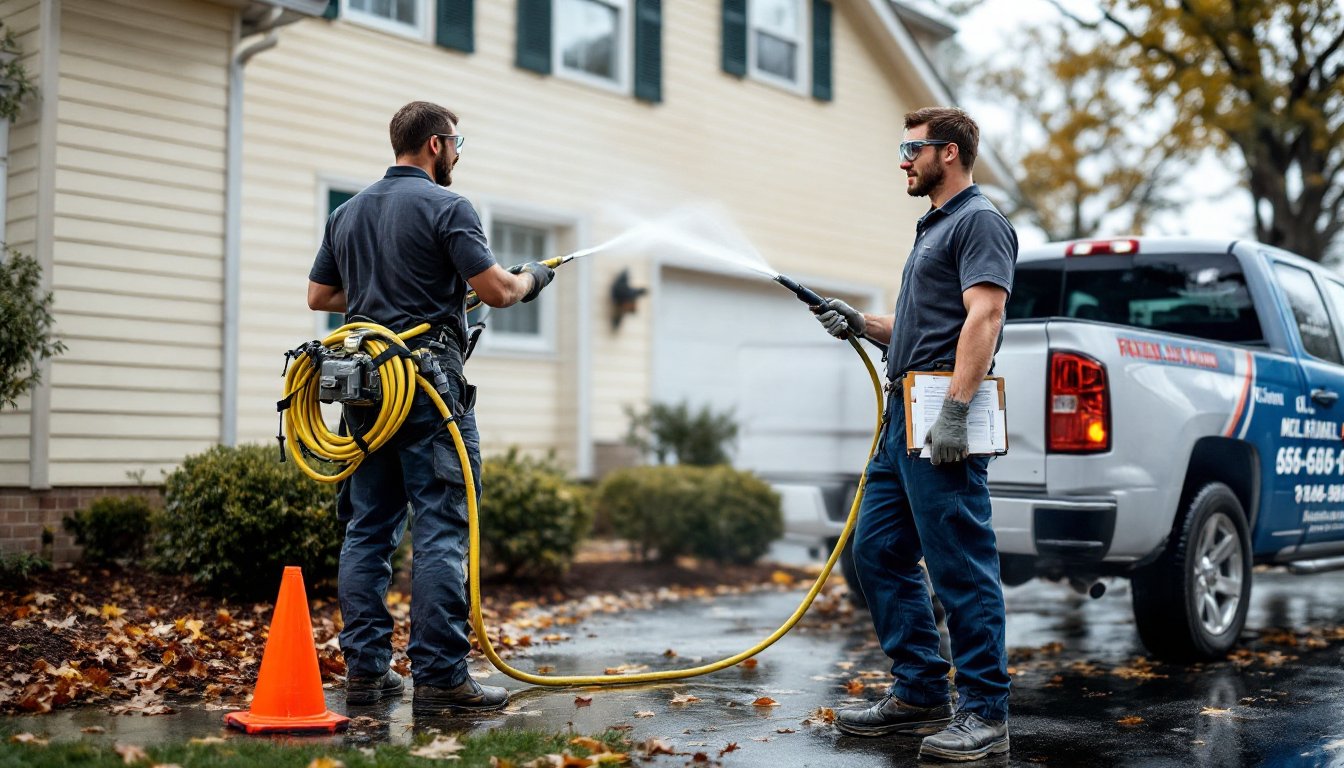
Pressure washing involves equipment that operates at 2,000 to 4,000 PSI or higher, enough force to strip paint, etch concrete, and cause serious injury. The business owner is working on someone else’s property, often around windows, vehicles, landscaping, and structural elements that cost thousands to repair or replace.
Property damage claims are common. A pressure washer can crack vinyl siding, force water behind exterior cladding and cause mold, shatter windows, or strip the finish off decking. Even experienced operators make mistakes, and sometimes the substrate itself has hidden weaknesses, rotted wood behind siding, for instance, that become the business owner’s problem the moment the trigger is pulled.
Bodily injury is the other major risk. Clients, bystanders, or even the operator can slip on wet surfaces. Overspray can hit someone in the eyes. Hoses and cords create trip hazards. If someone gets hurt on the job site, the business is typically liable, and medical bills plus lost wages add up fast.
Most commercial clients and many residential customers require proof of insurance before they’ll sign a contract. Property management companies, HOAs, and municipal contracts won’t even consider a bid without a certificate of insurance (COI) showing adequate liability coverage. Without it, the business is locked out of higher-paying work.
Finally, many states and local jurisdictions require certain types of insurance for contractors or service businesses. Operating without required coverage can result in fines, stop-work orders, or disqualification from business licenses.
Types of Insurance Coverage for Pressure Washing Companies
Pressure washing businesses need a combination of policies to cover equipment, liability, and transportation. Most operators start with general liability and commercial auto, then add coverage as the business grows.
General Liability Insurance
General liability (GL) is the cornerstone policy. It covers third-party bodily injury and property damage caused by business operations. If the operator damages a client’s siding, breaks a window, or someone slips on a wet driveway, GL steps in to cover repair costs, medical bills, and legal defense if the client sues.
Standard GL policies for pressure washing typically offer $1 million per occurrence and $2 million aggregate limits. The aggregate is the total the insurer will pay out during the policy period (usually one year). For many small operations, this is the minimum coverage clients and contracts require.
GL also includes completed operations coverage, which protects against claims that arise after the job is finished. If water intrusion from a pressure washing job causes mold six months later, completed operations coverage applies.
Some GL policies include personal and advertising injury coverage, which protects against claims of slander, libel, or copyright infringement, less common in pressure washing, but relevant if the business runs ads or has a public-facing brand.
What GL doesn’t cover: damage to the business owner’s own equipment, injuries to employees, or incidents involving company vehicles. Those require separate policies.
Commercial Auto Insurance
Commercial auto insurance is required if the business uses a vehicle to transport equipment, tow a trailer, or travel to job sites. Personal auto policies exclude business use, so driving to a client’s house with a pressure washer in the bed is technically uninsured under a personal policy.
Commercial auto covers liability (damage the driver causes to others), collision (damage to the business’s vehicle), and comprehensive (theft, vandalism, weather damage). If the operator uses a truck or van with business signage, carries tools and equipment regularly, or has “business use” noted on the registration, commercial auto is mandatory.
Most insurers require hired and non-owned auto (HNOA) coverage as well. This protects the business if an employee or subcontractor uses their personal vehicle for business purposes and causes an accident. It’s inexpensive and often bundled with GL.
Other useful policies include equipment insurance (also called inland marine), which covers pressure washers, surface cleaners, hoses, and other gear against theft, damage, or loss. Workers’ compensation is legally required in most states once the business hires employees, it covers medical costs and lost wages if a worker is injured on the job. Umbrella liability provides an extra layer of coverage above GL and auto limits, often starting at $1 million, and is worth considering once the business scales or takes on higher-risk commercial jobs.
How Much Does Pressure Washing Insurance Cost?
In 2026, general liability insurance for a sole proprietor pressure washing business typically costs between $400 and $1,000 per year for $1 million/$2 million coverage. Pricing depends on revenue, claims history, geographic location, and the types of jobs the business takes on.
A part-time operator doing residential driveways and decks in a low-cost region might pay closer to $400. A full-time business with multiple employees, commercial contracts, and higher revenue can expect $1,000 to $1,800 annually. High-risk work, such as multi-story buildings, historical properties, or chemical roof cleaning, pushes premiums higher.
Commercial auto insurance varies widely based on the vehicle, driver record, coverage limits, and location. A pickup truck with liability-only coverage might cost $1,200 to $1,800 per year. Adding collision and comprehensive can push that to $2,500 or more in high-cost states.
Equipment insurance generally costs 1% to 3% of the equipment’s replacement value per year. For a $5,000 rig (pressure washer, surface cleaner, hoses, wands), expect $50 to $150 annually.
Workers’ compensation is the biggest variable. Rates are set per $100 of payroll and vary by state and classification code. Pressure washing typically falls under a manual labor classification. In 2026, rates range from $2 to $8 per $100 of payroll depending on the state. For a business with $50,000 in annual payroll, that’s roughly $1,000 to $4,000 per year.
Bundling policies (a Business Owner’s Policy, or BOP) can reduce costs. A BOP combines GL, property, and sometimes equipment coverage at a discount. Many insurers offer BOPs tailored to contractors and service businesses starting around $800 to $1,500 per year.
How to Choose the Right Insurance Provider
Not all insurers understand pressure washing. The business owner should look for a provider with experience in contractor or service industry coverage, not a generic small-business carrier.
Look for specialized carriers or brokers. Companies like NEXT Insurance, Thimble, Hiscox, and The Hartford offer online quotes and policies tailored to contractors and field service businesses. These providers understand the risks and offer flexible coverage options without the overhead of a traditional agent.
Compare coverage limits and exclusions carefully. Some low-cost policies cap per-occurrence limits at $500,000 or exclude certain types of damage (e.g., water intrusion, chemical use). Read the exclusions list. If the business does roof cleaning, graffiti removal, or uses chemicals beyond standard detergents, make sure those activities are covered.
Check the financial rating. The insurer’s stability matters. Use A.M. Best ratings, look for carriers rated A- or higher. A bargain policy from a poorly rated insurer can leave the business owner fighting for claims payments or stuck if the company goes under.
Ask about certificates of insurance (COI) turnaround. Commercial clients often need a COI within 24 to 48 hours. Some online insurers generate them instantly: others take days. Fast COI delivery keeps jobs moving.
Review the claims process. Read reviews on how the insurer handles claims. A cheap premium means nothing if the carrier disputes every claim or drags out payments. Look for insurers with straightforward claims filing (app-based or online) and responsive support.
Consider bundling and payment options. Monthly payment plans make budgeting easier, though they often carry a small fee. Bundling GL, commercial auto, and equipment into one policy or BOP can save 10% to 20% compared to separate policies.
Reassess annually. As revenue grows, equipment gets upgraded, or employees are added, coverage needs change. Review the policy every year and adjust limits or add endorsements as needed.
Conclusion
Insurance is a cost of doing business in pressure washing, but it’s also the safety net that keeps one bad day from ending the operation. General liability and commercial auto are non-negotiable, and most growing businesses add equipment and workers’ comp as they scale. Shop around, read the fine print, and make sure the coverage matches the work. The right policy won’t just satisfy clients, it’ll let the business owner sleep at night.