Water damage costs U.S. homeowners an average of $11,000 per incident, and most don’t discover the leak until drywall is soaked or floors are buckled. A smart water leak detector catches problems early, sends alerts to a smartphone, and can prevent thousands in repairs. Unlike basic leak alarms that beep when wet, smart detectors integrate with home automation systems, offer remote monitoring, and some even shut off the main water supply. This guide covers the best smart water leak detectors for 2026, what features matter most, and how to install them in the spots most likely to spring a leak.
Table of Contents
ToggleKey Takeaways
- A smart water leak detector can prevent thousands in repairs by catching water damage early, with the average U.S. homeowner spending $11,000 per water damage incident.
- The best smart water leak detectors offer 24/7 remote monitoring, instant smartphone alerts, and integration with home automation systems like Alexa, Google Home, and Apple HomeKit.
- Premium options like Flo by Moen pair leak sensors ($50 each) with automatic shutoff valves ($500–$700 installed) to stop water flow automatically, while budget-friendly alternatives like Govee offer solid protection starting at $20–$30 per unit.
- Strategic placement in high-risk areas—under water heaters, behind toilets, under sinks, and near appliances—combined with proper testing ensures early detection within seconds of moisture.
- Smart leak detectors require proper network setup on 2.4 GHz Wi-Fi, regular battery checks, and sensor probe cleaning every six months to maintain reliable performance and prevent false alarms.
Why You Need a Smart Water Leak Detector
Most leaks start small, a pinhole in a supply line, condensation from an aging water heater, or a slow drip behind a washing machine. By the time a homeowner notices staining or warping, mold may already be growing inside wall cavities.
Smart leak detectors monitor high-risk areas 24/7 and send instant alerts when moisture is detected. They’re especially valuable in basements, under sinks, near water heaters, behind toilets, and around appliances like dishwashers and refrigerators with ice makers.
Key benefits include:
- Remote monitoring: Alerts arrive via smartphone app, even when the homeowner is away or on vacation.
- Early detection: Sensors respond to moisture within seconds, minimizing damage.
- Integration: Many models work with smart home ecosystems (Alexa, Google Home, Apple HomeKit) and can trigger other actions, like shutting off HVAC systems to prevent mold spread.
- Insurance discounts: Some insurers offer premium reductions for homes equipped with smart leak detection and automatic shutoff systems.
For homes with finished basements, multiple bathrooms, or older plumbing (anything pre-1980 with galvanized steel or polybutylene), smart leak detectors provide an affordable insurance policy against catastrophic water damage.
Top Smart Water Leak Detectors Compared
Choosing the right detector depends on budget, home size, and whether the homeowner wants a standalone sensor or a full system with automatic shutoff capability. Here are the top picks for 2026.
Premium Pick: Best Overall Performance
Flo by Moen Smart Water Detector combined with the Flo Smart Water Shutoff offers the most comprehensive protection. The individual sensors ($50 each) detect leaks and monitor temperature and humidity, useful for spotting conditions that lead to pipe freeze or mold.
The real value comes from pairing sensors with Moen’s whole-home shutoff valve ($500–$700 installed). It mounts on the main water line and uses pressure monitoring and machine learning to detect abnormal flow patterns, like a running toilet or a burst pipe. When the system detects a problem, it automatically shuts off water and sends an alert.
Installation of the shutoff valve typically requires a licensed plumber, as it involves cutting into the main supply line, usually copper or PEX, and adding a 1-inch or ¾-inch NPT ball valve inline. Budget 2–3 hours of labor. Individual sensors, but, are battery-powered (two AA batteries, ~2-year life) and install in seconds.
Best for: Homeowners willing to invest in whole-home protection, especially those with vacation properties or high-value finishes.
Budget-Friendly: Best Value Option
Govee Wi-Fi Water Leak Detector (around $20–$30 per unit) delivers solid performance without a subscription or hub. These sensors connect directly to Wi-Fi, send push notifications, and sound a 100-decibel alarm when moisture is detected.
The sensor probe uses two metal contacts spaced about ½ inch apart. When water bridges the gap, the circuit closes and triggers the alert. Battery life is comparable to premium models (around 18–24 months on two AAA batteries), and the Govee app allows users to monitor multiple sensors across different locations.
Limitations: No integration with automatic shutoff systems, and Wi-Fi connectivity can be spotty in basements with thick concrete foundations. For those areas, consider a model with a separate hub or cellular backup.
Best for: Renters, first-time DIYers, or anyone looking to cover multiple leak-prone areas without breaking the budget.
Other notable mentions include the Aqara Water Leak Sensor (requires Aqara hub but integrates seamlessly with HomeKit) and YoLink Water Leak Sensor (uses long-range LoRa technology, ideal for large properties or detached garages).
Key Features to Look For
Not all smart leak detectors are created equal. Homeowners should evaluate these features before buying:
Sensor Type and Sensitivity
Most detectors use contact probes that sit flat on the floor. Look for models with extended probe cables (6–12 inches) to reach into tight spaces like under water heaters or behind pedestal sinks. Some sensors also detect humidity and temperature changes, offering early warning of condensation issues or frozen pipe risk.
Connectivity
Wi-Fi models connect directly to the home network and don’t require a hub. Zigbee and Z-Wave sensors need a compatible smart home hub (like SmartThings or Hubitat) but often have better battery life and more reliable communication through mesh networking. Bluetooth-only sensors are limited to close-range alerts and aren’t suitable for remote monitoring.
Battery Life vs. Wired Power
Battery-powered sensors offer flexible placement but require periodic replacement, typically every 1–2 years. Some premium models use CR123A lithium batteries for 5+ year life. Wired sensors eliminate battery concerns but require access to an outlet, which isn’t always available under sinks or in crawl spaces.
Alert Options
Push notifications are standard, but also look for loud local alarms (90+ decibels), email alerts, and IFTTT integration for custom actions (like flashing smart lights or sending texts to multiple family members).
Automatic Shutoff Capability
Standalone sensors only alert: they don’t stop the leak. For full protection, pair sensors with a smart water shutoff valve. These valves install on the main water line and close automatically when a leak is detected. Professional installation is recommended, and costs typically run $400–$800 depending on pipe material and accessibility.
Subscription Fees
Some systems charge monthly fees for cloud storage, advanced analytics, or cellular backup. Read the fine print, base functionality should work without ongoing costs.
Installation and Setup Tips
Most smart leak detectors install in under five minutes. Here’s how to get the best results:
Placement Strategy
Position sensors where water is most likely to pool:
- Directly under water heater drain pans
- Behind toilets, near the supply line and wax ring
- Under sinks, close to the P-trap and supply valves
- Next to washing machines, dishwashers, and refrigerators with water lines
- In basements near sump pumps or floor drains
- Under HVAC condensate pans
Avoid placing sensors where normal condensation occurs (like directly under AC vents) to prevent false alarms.
Flat, Level Surface
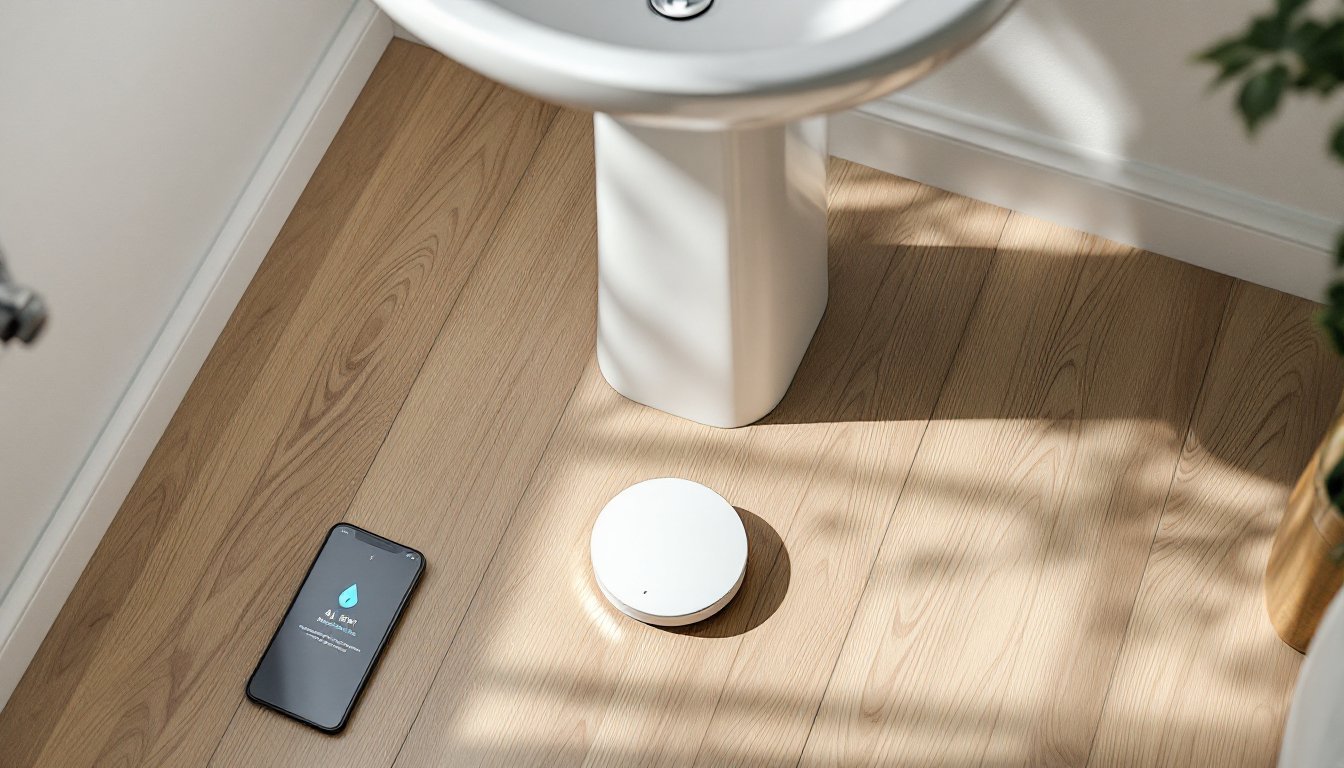
Sensors need full contact with the floor to detect moisture. On uneven tile or textured concrete, use a small amount of double-sided foam tape to ensure the probe sits flush. Don’t mount sensors on walls or shelves, they detect water on the ground.
Test Before You Trust
After installation, test each sensor by placing a damp paper towel across the probe. The alarm should sound within seconds, and the app should send a notification. If alerts are delayed or don’t arrive, check Wi-Fi signal strength or move the sensor closer to the router.
Network Setup
Most Wi-Fi sensors work on 2.4 GHz networks only, they won’t connect to 5 GHz. If the router broadcasts both bands under the same SSID, temporarily disable 5 GHz during setup, or create a dedicated 2.4 GHz guest network.
Safety and Maintenance
Wear safety glasses when working under sinks or around water heaters, tight spaces often have sharp edges or protruding nails. Check batteries annually, even if the app reports sufficient charge. Clean sensor probes every six months with a dry cloth to remove dust or mineral buildup that can interfere with conductivity.
For systems with automatic shutoff valves, schedule a professional inspection every 2–3 years to ensure the valve actuator and seals are in good condition. Most plumbers will test the valve during routine maintenance visits.
Conclusion
Smart water leak detectors are one of the most cost-effective upgrades a homeowner can make. For less than $100, a few strategically placed sensors can prevent thousands in water damage and the headache of tearing out drywall, replacing flooring, and fighting mold.
Start with high-risk areas, water heaters, washing machines, and sinks, then expand coverage as budget allows. Pair sensors with an automatic shutoff valve for comprehensive protection, especially if the home is left unattended for extended periods.